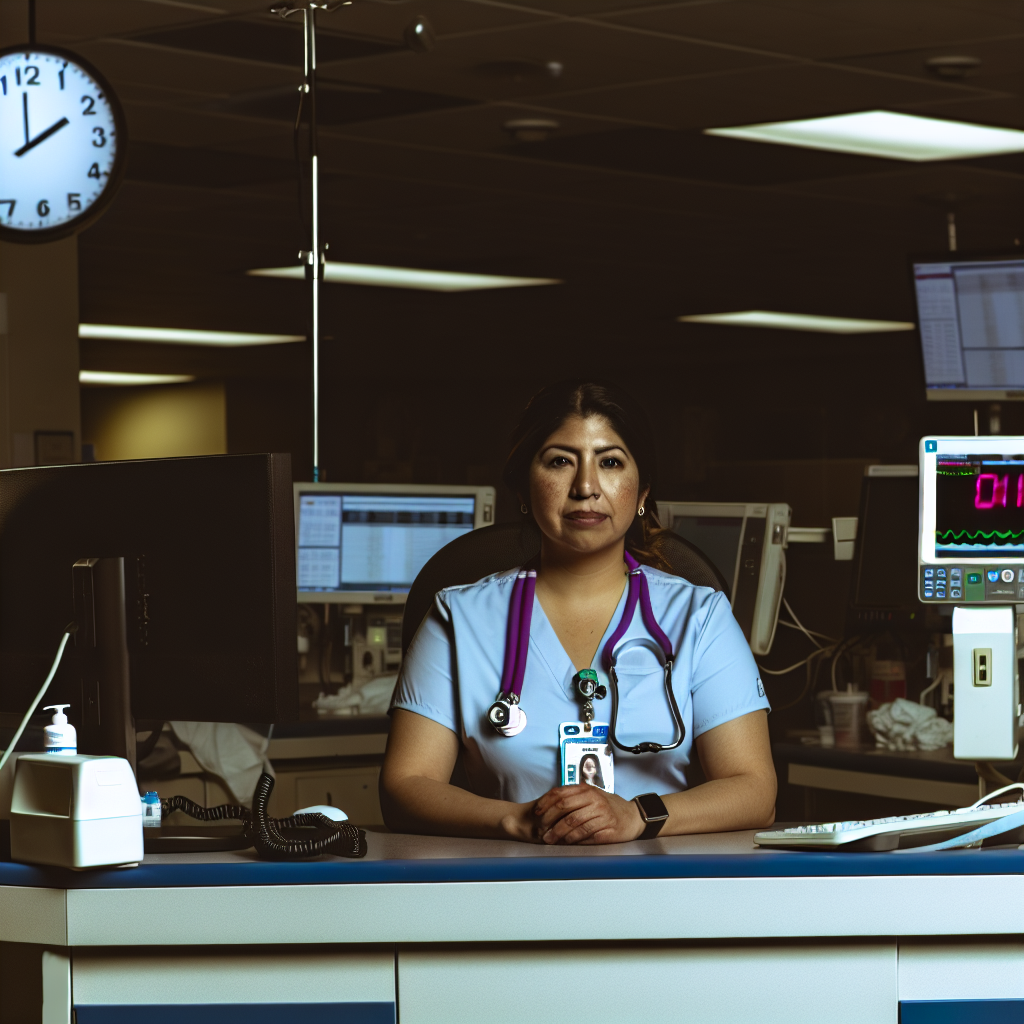
For the millions of healthcare workers, security personnel, and other professionals who work night shifts, proper light exposure can mean the difference between peak performance and dangerous fatigue. This comprehensive guide translates cutting-edge melanopic lighting research into practical, evidence-based recommendations for shift workers.
Understanding Melanopic Light
Light that stimulates melanopsin-containing retinal ganglion cells (most sensitive ≈ 480 nm) is a primary driver of our circadian timing system. Its potency is expressed in melanopic lux (aka equivalent melanopic daylight illuminance, EDI). Appropriate timing, spectrum and intensity of melanopic light keeps workers alert when they need to perform and lets them sleep when they go off-duty.
Understanding the Science
The specific wavelength around 479-480nm is critical for circadian regulation—the same blue light that can enhance alertness during night shifts can severely disrupt sleep if encountered at the wrong time. For a deeper dive into how timing transforms blue light from friend to foe, read our companion article: The Blue Light Timing Paradox: Why 479nm Makes or Breaks Your Day.
Key Research Finding
A recent systematic review and meta-analysis published in Scientific Reports (2025) found that providing ≥ 200-300 melanopic lux during night shifts, with bursts of brighter light (1,000–5,000 lx photopic) for 15-60 minutes, gives the strongest boost to vigilance and performance.1
During the Shift – Staying Alert
Core Lighting Strategy
- Provide ≥ 200-300 melanopic lux at eye level for the first half of each night shift
- Short bursts of brighter light (1,000–5,000 lx photopic; blue-enriched ~6,500 K) for 15-60 min at shift start and again around 02:00–04:00
- Dynamic lighting approach: Keep light bright & cool-white before midnight, then dim to warm (< 20 melanopic lx) in the last 1-2 hours2
Facility-Level Solutions
If whole-ward lighting can't be raised, facilities should provide staff access to a "circadian light break room" delivering ≥ 250 melanopic lx, as required by WELL Building Standard v2 Feature L04 Pt 3.3
Before & After the Shift – Protecting Sleep
Pre-Sleep Protocol
- Commute home in darkness: Wear blue-blocking sunglasses to keep morning sunlight (< 10 melanopic lx) from suppressing melatonin
- Day-sleep environment: Maintain bedroom ≤ 1 melanopic lx (blackout curtains, eye-mask, red night-lights)
- Schedule transition: When switching back to day schedule after night shifts, seek bright natural light the first morning off
These recommendations are based on expert consensus guidance that emphasizes the critical importance of protecting the sleep period from circadian-disrupting light exposure.4
Quick-Reference: Night-Shift Schedule
| Time Period | Target Melanopic Lux | Duration | Spectrum Notes | Goal |
|---|---|---|---|---|
| 18:00–22:00 (waking/commute) |
≤ 150 lx | Household lighting | Neutral | Gradual activation |
| 22:00–02:00 (first half shift) |
≥ 300 lx | ≥ 30 min blocks | Cool/blue-enriched 5000-6500 K | Boost alertness & mood |
| 02:00–05:00 (second half shift) |
< 50 lx | Gradual dimming | Warm ≤ 2700 K | Prepare for sleep |
| 05:00–07:00 (post-shift) |
< 10 lx | Commute home | Blue-blocking sunglasses | Protect melatonin |
| 08:00–16:00 (sleep period) |
< 1 lx | Whole sleep | Darkness or red < 1 lx | Consolidate sleep |
Related Reading: Comprehensive Blue Light Science
This guide focuses specifically on practical applications for shift workers, but understanding blue light's broader impacts can enhance your approach to circadian health:
Essential Companion Articles
- Melanopic Lighting in Behavioral Health: Clinical Evidence for High-Day, Low-Night Protocols
Comprehensive review of clinical evidence supporting the high-day, low-night melanopic lighting protocols recommended in this shift worker guide. Includes RCTs in depression, mania, and acute psychiatric care—relevant for healthcare workers managing their own mental health during challenging shift schedules. - The Blue Light Timing Paradox: Why 479nm Makes or Breaks Your Day
Explores the fundamental science behind why the same 479nm wavelength referenced in this shift worker guide can either boost performance or ruin sleep, depending entirely on timing. Essential reading for understanding the biological mechanisms behind these recommendations. - The Aging Eye: Why Seniors Need 5X More Blue Light for Healthy Sleep
Healthcare workers over 45 should note that age-related changes in the eye dramatically reduce melanopic light sensitivity. Older shift workers may need significantly higher light intensities than the baseline recommendations in this guide to achieve the same circadian benefits.
Health Rationale
The health benefits of properly timed light exposure for shift workers are well-documented:
- Improved performance: Meta-analysis of nurse studies shows better sleep length and quality, faster reaction times, and improved mood5
- Reduced health risks: Prevents chronic light-at-night exposure, which is linked to obesity, diabetes, cardiovascular disease
- Cancer prevention: IARC has classified chronic circadian disruption as "probably carcinogenic"6
"Correctly-timed light improves sleep length and quality, reaction time, and mood in hospital night staff" – Meta-analysis of nurse lighting intervention studies5
Industry Standards & Professional Guidance
WELL Building Standard v2
- ≥ 200 melanopic lx in work areas by day
- ≤ 50 lx at night in homes
- ≥ 250 lx in 24-hour facility break rooms
IES RP-29-22 Recommendations
The Illuminating Engineering Society recommends tunable, high-CRI fixtures that can deliver both bright, blue-rich light for staff work areas and low-circadian-impact light for patient rooms.7
Clinical Sleep Medicine
The American Academy of Sleep Medicine endorses timed bright-light therapy and melatonin for shift-work disorder management as evidence-based treatments.
Implementation Tip
Start with personal lighting solutions (desk lamps, light boxes) before advocating for facility-wide changes. A 30-minute bright light exposure at shift start can significantly improve alertness and is easily achievable with portable devices.
Advanced Circadian Lighting Solutions for Healthcare Facilities
While personal devices can provide immediate benefits, healthcare facilities seeking comprehensive circadian lighting solutions should consider advanced systems that can automatically deliver the precise melanopic exposures outlined in this guide.
Next-Generation Artificial Skylights
Modern circadian lighting systems like Innerscene's Circadian Sky represent a significant advancement over traditional blue-enriched lighting approaches. These systems address the key requirements for shift worker lighting with several advantages over conventional solutions:
- Extended Color Temperature Range: While this guide references 5,000-6,500K lighting, advanced systems can reach up to 40,000K—matching the deep blue spectrum of natural sky and providing more effective melanopic stimulation
- Superior Melanopic Efficiency: With melanopic ratios up to 1.6, these systems can deliver the required ≥ 200-300 melanopic lux with lower overall light intensity, reducing glare and visual discomfort for night shift workers
- Automated Circadian Programming: Built-in controls dynamically adjust color temperature and intensity throughout the shift, automatically transitioning from alerting blue-enriched light (early shift) to sleep-promoting warm light (end of shift)
- Natural Visual Appearance: Unlike harsh LED panels, these systems mimic the appearance of natural skylights, creating a more comfortable and psychologically beneficial work environment
Evidence-Based Integration
These advanced systems meet WELL Building Standard v2 requirements mentioned in this guide, providing the ≥ 250 melanopic lux recommended for 24-hour facilities while offering the dynamic range needed for optimal shift worker support—from high-melanopic alerting light to low-melanopic sleep preparation.
Practical Implementation for Healthcare
For healthcare facilities implementing the guidelines in this article, artificial skylight systems offer several operational advantages:
- Zone-based Control: Different areas can follow different circadian schedules—bright alerting light in staff areas, gentle low-melanopic light in patient recovery rooms
- Workstation Integration: Units can be installed directly in walls near nursing stations and work areas to provide targeted high-melanopic stimulation where staff need maximum alertness, while the dual-reflection technology creates a depth effect that reduces visual fatigue during long shifts
- Reduced Maintenance: Unlike banks of tunable LED fixtures, ceiling-integrated artificial skylights provide uniform circadian lighting with minimal maintenance requirements
- Staff Wellness: The natural appearance and dynamic lighting help address the psychological challenges of night shift work, supporting both circadian health and overall well-being
"Healthcare facilities implementing comprehensive circadian lighting systems report improved staff alertness, reduced fatigue, and better patient satisfaction scores compared to facilities using traditional fluorescent or static LED lighting."
As the evidence for timed melanopic light exposure in shift work continues to strengthen, forward-thinking healthcare facilities are investing in lighting infrastructure that can automatically deliver these evidence-based protocols, ensuring consistent circadian support for their most valuable asset—their staff.
References
1. Güler E. & Smith M. (2025). "Timed bright light improves alertness in shift-worker nurses: systematic review and meta-analysis." Scientific Reports. https://www.nature.com/articles/s41598-024-83789-3
2. Lowden A. et al. (2021). "Considerations on how to light the night-shift." Lighting Research & Technology. https://doi.org/10.1177/14771535211012251
3. WELL Building Standard v2 – Feature L04 Circadian Lighting. https://resources.wellcertified.com/v2/en/feature/lighting/light-l04
4. Brown TM et al. (2022). "Recommendations for daytime, evening, and nighttime indoor light exposure to best support physiology, sleep, and wakefulness in healthy adults." PLOS Biology. https://doi.org/10.1371/journal.pbio.3001571
5. Bani Younis M. (2020). "Effectiveness of bright light exposure in shift-worker nurses." Meta-analysis. https://www.ncbi.nlm.nih.gov/pmc/articles/PMC7384530/
6. IARC Monographs Vol 124: Night-Shift Work. https://www.iarc.who.int/news-events/iarc-monographs-volume-124-night-shift-work/
7. ANSI/IES RP-29-22 Lighting Hospital and Healthcare Facilities. https://store.ies.org/product/rp-29-22-lighting-hospital-and-healthcare-facilities/